Jan 10
Kingston, Ontario: The Quietly Queer Great Lakes Getaway You Haven’t Heard About…Yet
READ TIME: 7 MIN.
If Toronto is the loud, sequined older cousin of Canadian queer travel, Kingston is the younger, artsy one who shows up in vintage denim and knows every local band,.
Kingston is not yet a headliner on queer travel lists dominated by Montréal, Toronto, and Vancouver, but the ingredients are there: legal protections, visible community organizations, an annual Pride that spills right onto Lake Ontario, and a creative, youth-driven culture that treats LGBTQ+ inclusion as a given rather than a marketing slogan.
Kingston sits about halfway between Toronto and Montréal along Highway 401 and the VIA Rail line, with regular trains and buses linking it to all three major cities in a few hours. It’s also the gateway to the Thousand Islands region, with ferries heading out into the St. Lawrence River and Lake Ontario — which means yes, your Pride weekend can absolutely involve a boat.
The city is home to around 136, 000 people and has a disproportionately large student population thanks to Queen’s University, St. Lawrence College, and the Royal Military College of Canada. In practical terms, that means a lot of young adults, an energized nightlife and arts scene, and a political climate where LGBTQ+ issues are not fringe, but squarely on the agenda.
For queer travelers, safety and dignity matter far more than a cute drag brunch. Kingston’s recent moves on equity are a big reason it deserves a closer look.
In 2021, Kingston adopted a corporate Equity, Diversity and Inclusion strategy that explicitly commits the municipality to better support LGBTQ+ residents, including staff training, inclusive hiring, and ongoing consultation with community members. The city’s “Equity, Diversity and Inclusion for a Thriving Kingston” report names sexual orientation and gender identity as protected dimensions and calls for continuous engagement with LGBTQ+ communities, not just one-off campaigns.
This is layered on top of Ontario’s Human Rights Code, which has explicitly protected gender identity and gender expression since 2012, and Canada’s federal legal framework, which recognizes marriage equality and prohibits discrimination on the basis of sexual orientation and gender identity in key areas like employment and housing.
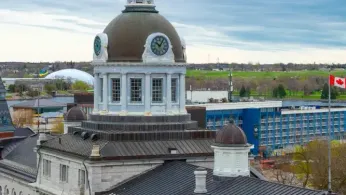
At the more symbolic but still meaningful end of the spectrum, Kingston permanently installed a rainbow crosswalk near city hall in 2019 and has since added a trans flag crosswalk in support of transgender and gender-diverse people, after consultation with local advocates. City hall and several municipal buildings routinely raise the Progress Pride flag for Pride Month and Trans Day of Visibility, with council members attending public ceremonies and using the events to reaffirm support for LGBTQ+ residents.
Now, onto the fun part: what it actually feels like to be queer in Kingston for a weekend.
The local Pride organization, Kingston Pride Inc. , runs an annual June festival that includes a march, a community fair, and waterfront events along Confederation Park and Ontario Street. In recent years, Kingston Pride has added a Pride on the River boat cruise, outdoor drag shows, and sober social events, reflecting the community’s call for more inclusive, accessible programming.
The 2024 Kingston Pride parade drew hundreds of people, with support from local unions, small businesses, and all three post‑secondary institutions. While those numbers are modest compared with Toronto, the density of rainbow signs in shop windows, the presence of families with young children, and the visible involvement of transgender, nonbinary, and Two-Spirit people created a vibe many attendees described as “intimate” and “genuinely community‑driven. ”
Throughout the year, Kingston Pride and partner organizations host events ranging from drag bingo to queer film screenings and a winter Pride skate at Springer Market Square. The square itself — a historic stone plaza overlooked by city hall — becomes an ice rink in colder months, and the city has promoted it explicitly as a safe, welcoming space for LGBTQ+ residents during winter programming.
Kingston’s size means there is no dedicated “gayborhood” like Toronto’s Church-Wellesley or Montréal’s Village, but queer life is woven through its downtown streets, campus spaces, and arts venues.
Queen’s University’s Levana Gender Advocacy Centre and the Education on Queer Issues Project run peer support, social events, and advocacy for students, contributing to a campus culture where LGBTQ+ identities are visible and increasingly affirmed. St. Lawrence College has its own Equity, Diversity and Inclusion framework including support for 2SLGBTQ+ students, and the Royal Military College has, in recent years, hosted Pride events and public discussions about inclusion in the Canadian Armed Forces.
Off campus, the Kingston Frontenac Public Library hosts queer book clubs, drag story hours, and Trans Day of Visibility displays curated with input from local transgender and nonbinary residents. These public, intergenerational events not only provide options for families and elders but also subtly signal to visitors that queer and trans stories are valued in civic spaces.
The performance scene is where Kingston really overachieves for its size. The city’s historic limestone downtown is dotted with venues that regularly host drag, burlesque, and queer‑centric shows.
- The Grad Club regularly features drag nights and LGBTQ+ musicians, often in collaboration with student groups.
- Kingston Grand Theatre has staged touring productions featuring queer stories and performers, including shows scheduled during Pride Month.
- At bars like The Toucan, Something in the Water Brewing Co. , and other indie venues, local drag artists like Kingston‑based queens and kings rotate through themed nights, often benefiting community causes like queer youth programs.
These cabaret‑style nights aren’t just entertainment; they are social glue for the city’s LGBTQ+ population — a mix of students, long‑time locals, military families, and newcomers from larger cities who have moved for affordability and quality of life.
From a practical standpoint, queer travelers often want to know: if something goes wrong, will I be okay here?
Healthcare in Kingston is anchored by Kingston Health Sciences Centre , which has publicly committed to improving care for gender-diverse and LGBTQ+ patients through its Equity, Diversity and Inclusion strategy. KHSC works with community groups on training around pronouns, discrimination, and inclusive care, and supports referrals for gender-affirming services available through provincial networks.
The HIV/AIDS Regional Services Kingston provides support, harm reduction, and community-building programs for people living with or at risk of HIV, with explicit focus on gay, bisexual, and other men who have sex with men, as well as people who use drugs and people facing housing precarity. They partner with Kingston Pride and local healthcare providers for testing campaigns and educational events, meaning visitors will find a service ecosystem that understands LGBTQ+ sexual health.
On the policing side, Kingston Police has an Equity, Diversity and Inclusion Office and has participated in Pride events and community dialogues regarding police presence at Pride, a contentious issue in many cities. Activists in Kingston, as elsewhere, have debated the role of law enforcement in queer spaces, with some events choosing to limit formal police involvement in order to prioritize the comfort of Black, Indigenous, and otherwise marginalized LGBTQ+ people.
For transgender and gender-diverse people, local organizers have created peer support groups, informal name‑change clinics, and mutual aid for access to binders, clothing, and travel for medical appointments. While many specialized medical services still require travel to larger centres like Toronto or Ottawa, the presence of community-based support can make short stays in Kingston feel noticeably more grounded for visiting transgender people.
Imagine this: you arrive by train at Kingston’s historic station, stroll down to a waterfront hotel or a cozy downtown inn, and by sunset you’re sipping a local cider on a patio while watching the Wolfe Island ferry slide across Lake Ontario.
Daytime Kingston is all about stone and water: you can tour Fort Henry, a 19th‑century military fortress with sweeping lake views, or wander the campus of Queen’s University, whose ivy‑draped buildings could pass for a small British city. While these sites are not explicitly queer, Kingston’s layered history includes LGBTQ+ people in its storytelling more than many small cities; for instance, local museums and heritage organizations have partnered with Queen’s researchers on projects highlighting queer histories in the region.
On a Pride weekend in June, you might:
- Join the Pride march down Princess Street, flanked by rainbow-clad locals cheering from café doorways.
- Hit the community fair in Confederation Park, where booths range from queer student groups to local artisans and social services.
- Book an evening Pride cruise on the St. Lawrence, complete with DJ, drag performances, and the utterly unnecessary but deeply correct experience of seeing a giant Progress Pride flag ripple in the lakeside wind.
Outside Pride season, a weekend could include a drag show at the Grad Club, a queer poetry or storytelling night at a downtown café, and a quiet Sunday morning browsing the Memorial Centre Farmers’ Market, where queer couples and families blend seamlessly into the crowd.
Kingston also makes a convenient base for exploring the Thousand Islands — you can spend a day kayaking or taking a boat tour and still be back in time for evening drag bingo.
If you’re used to big, famous gay destinations — Toronto’s Church Street, Montréal’s Sainte-Catherine, Vancouver’s Davie Village — Kingston might sound almost too quiet. Yet that’s exactly its appeal.
Travel publications have increasingly encouraged LGBTQ+ visitors to look beyond marquee cities toward smaller, more sustainable destinations that still offer legal protections and established community networks. Kingston fits that trend: it is large enough to provide hospitals, public transit, and a year‑round events calendar, but small enough that you’re likely to run into the same faces at the Pride parade, the drag show, and the Sunday market.
The city’s affordability relative to Toronto and Ottawa has also attracted artists, students, and early‑career professionals, including LGBTQ+ people who want to own homes or studios without leaving queer community behind. That influx brings with it new queer‑owned small businesses, more diverse nightlife, and a steady trickle of programming that reflects intersectional identities — from events centering queer people of colour to accessible, sober‑friendly spaces.
Because Kingston is not yet a “gay tourism brand, ” visitors are less likely to be treated as a niche market and more as part of the city’s broader fabric. For some travelers — especially LGBTQ+ people who are disabled, racialized, or simply over the circuit‑party vibe — that can feel refreshingly low‑pressure.
This isn’t a place where you’ll find a rainbow‑flagged bar on every corner. Instead, Kingston offers a slower, more integrated kind of queer travel: you step into the city’s daily life, and some of that life is openly, joyfully LGBTQ+. From drag on campus to Pride flags on century‑old limestone porches, the message is clear — you are not a side note here.
For travelers looking to sidestep the mega‑destinations without sacrificing safety, community, or a good waterfront patio, Kingston quietly checks all the boxes. And if you go now, you can still say you knew about it before everyone else.